The Evidence Project uses implementation science
the strategic generation, translation, and use of evidence
to improve family planning policies, programs, and practices. Led by the Population Council, the five-year project (2013
2018) is investigating which strategies work best in improving, expanding, and sustaining family planning services. It is also evaluating how to implement and scale up those strategies. Critical to the Evidence Project is translating this knowledge and working with stakeholders to apply the evidence and to build capacity in using implementation science to improve policies, programs, and practices.
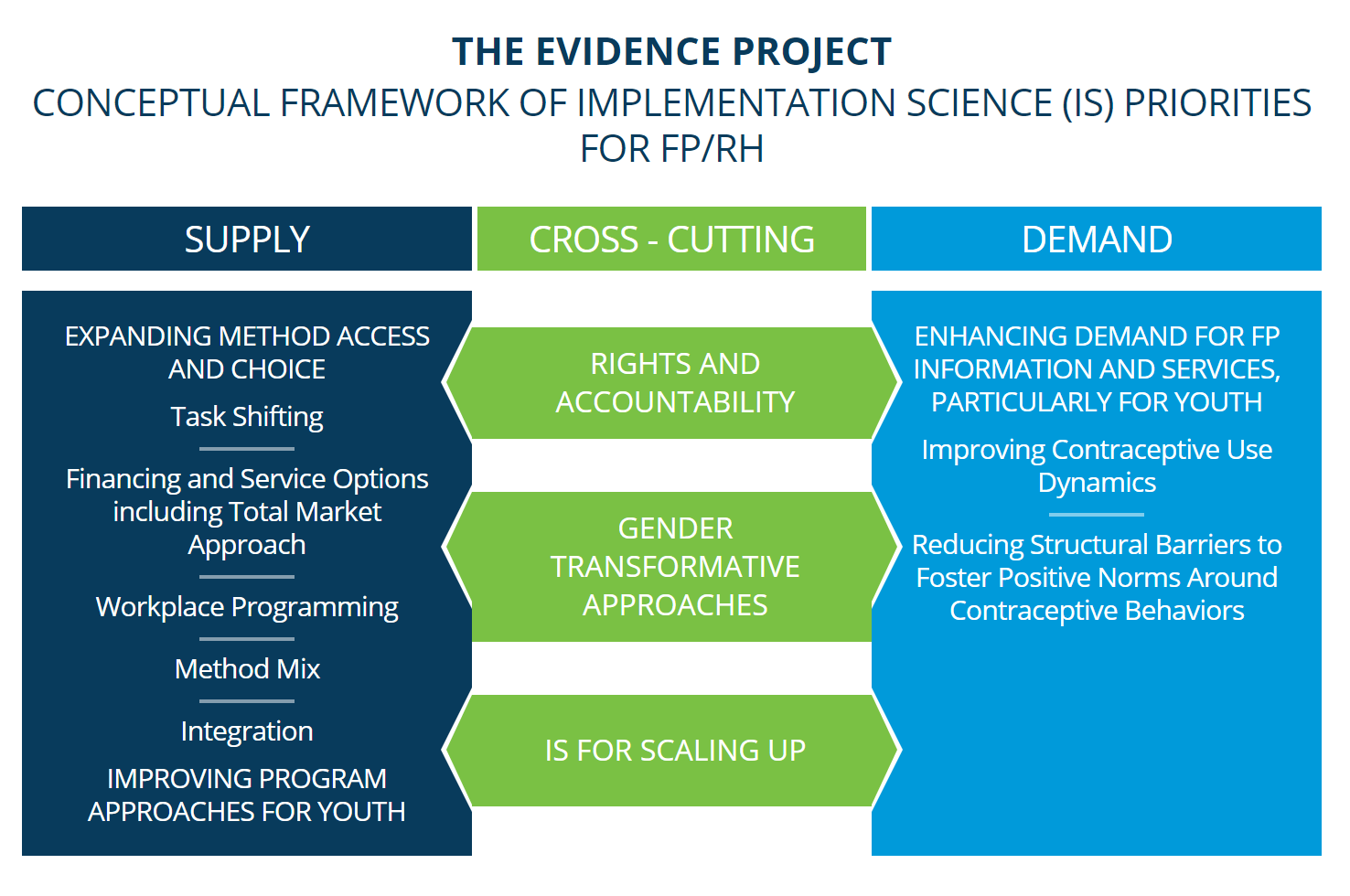
Through implementation science, the Evidence Project pinpoints how family planning and reproductive health services can operate more effectively, equitably, and at scale. The project is focused on several implementation science technical priorities and activities organized around key supply and demand factors that affect access to and use of family planning and reproductive health services. It also focuses on three cross-cutting principles: rights and accountability, gender equality, and implementation science for scale up. Through this work, the Evidence Project is helping to reduce unmet need and unintended pregnancies around the world.
Project Activities
The Evidence Project is leading the discussion on:
- Social accountability for sexual and reproductive health and rights.
- Adolescent-friendly reproductive health services.
- Generating evidence and impact through implementation science.
- Reproductive health services in the workplace.
Explore Project Publications
Access the latest Evidence Project publications on the Population Council website.