
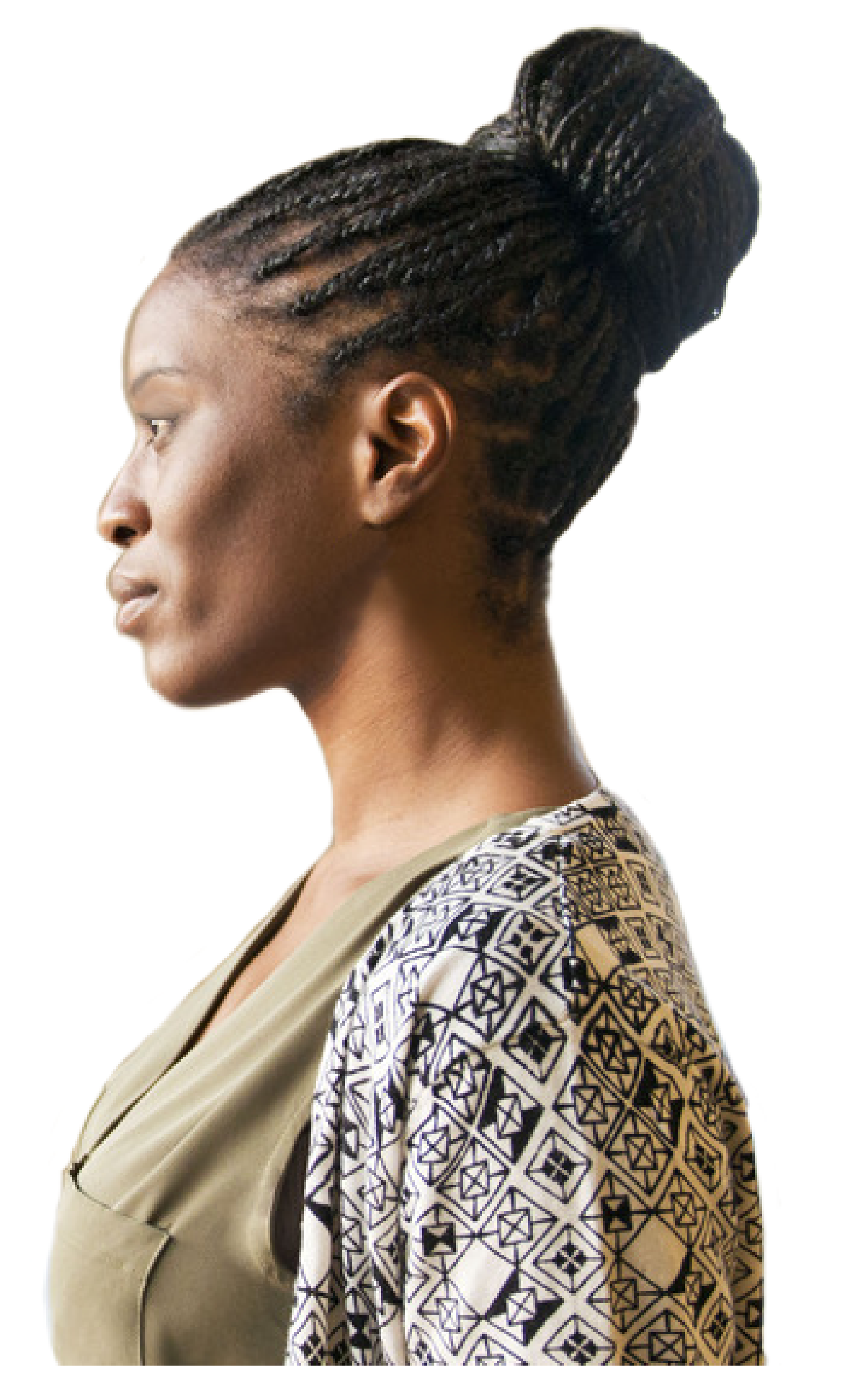

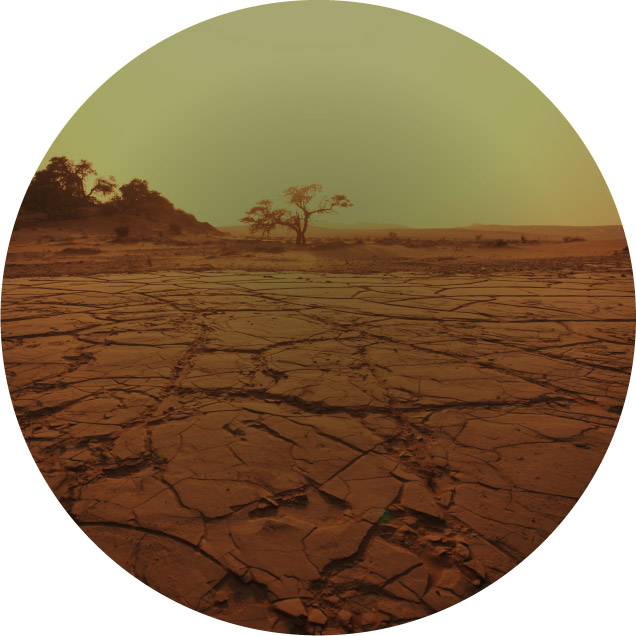
Many families in developing countries lack resilience, or the ability to adapt, respond, and recover from a traumatic event. It could be a natural disaster, like an earthquake, flood, or crop failure, or social disruption brought on by unstable governments or violence. Shocks like these can worsen existing social challenges.
- RESILIENCE
- USAID defines resilience as “the ability of people, households, communities, countries, and systems to mitigate, adapt to, and recover from shocks and stresses in a manner that reduces chronic vulnerability and facilitates inclusive growth.”1

How can we make sure families are resilient to a future crisis?
EMPOWER WOMEN.
Recent evidence suggests that when women do better socially and financially, and are empowered to make decisions, their families are less vulnerable in a crisis.2, 3 Women can then contribute more to building stronger communities, as well as helping their families and communities recover from a crisis.
?
How can we empower women?
Click to Continue

VOLUNTARY FAMILY PLANNING.
One strategy to empower women is through voluntary family planning programs. Family planning gives women and couples the chance to choose how many children to have and when to have them. The benefits to health and nutrition, education, and income form a strong, stable foundation for women and their families before disasters happen.
Health & Nutrition
With family planning, women can wait the recommended two years after giving birth before becoming pregnant again. These longer birth intervals are linked to reductions in stunting and underweight children—two major barriers to becoming healthy, productive adults.4, 5 Family planning can also help women maintain a healthy weight-for-height ratio.6
Experts estimate that family planning prevents more than 270,000 maternal deaths worldwide each year. By providing family planning to all the women who want it (or meeting current levels of unmet need), family planning could save an additional 100,000 maternal lives each year.7
- UNMET NEED
- Women with unmet need for family planning are those who are able to become pregnant and are sexually active but are not using any method of contraception (modern or traditional), and report wanting to delay their next pregnancy by two years or more or limit their number of births.
Education
Family planning can help women reach higher levels of education before having children. Girls who become pregnant may have to drop out of school.8, 9 In addition, research has shown that children of women who use family planning achieve higher levels of education.6
Economic Stability
Research from Bangladesh shows that, over time, women who had consistent access to a comprehensive family planning, maternal, and child health program became better off financially than similar families who did not have access to that program. The benefits included higher incomes, owning more farmland, greater investments in diverse crops and non-agricultural assets, and a higher home value.6
?
What happens when a crisis occurs?
Click to Continue
The benefits of family planning help families cope with the immediate aftermath of a crisis.
 CLICK THE SEGMENTS TO THE RIGHT TO SEE HOW THOSE FAMILY PLANNING BENEFITS CAN BE UTILIZED DURING A CRISIS.
Health & Nutrition
Healthier women and children are better able to withstand the food shortages and infectious disease outbreaks that may follow a disaster.10 With lower maternal mortality, families have a better social support system led by adults to respond to a crisis and care for children and the elderly. Healthier mothers are also more likely to have the time and energy to actively participate in the labor force.
Education
Education for girls, especially secondary education, boosts resilience for women and their families across their lifespan. Every additional year of education increases a person’s wages by 10 percent.11 Research shows that when women have secondary education, they use more health services for their families and improve household nutrition, making their whole family healthier.12 Women with more education and skills are better positioned to find work and identify resources in the wake of disasters.
Economic Stability
Better health, more education, and access to family planning all contribute to economic stability, giving women and households more assets to draw on in the face of a crisis. With this stronger financial base, families are better positioned to rebuild their homes and their livelihoods. Healthier women can find new work and the resources to feed and care for their families.
?
How do we help families move along the path to resilience?
Click to Continue
There are currently more than 225 million women worldwide who want to limit or space their children’s births but aren’t using a modern form of contraception.13
Policies
to support access to family planning information and services.
Funding
for a wide variety family planning products and services at both national and local levels.
Health Communication
to enable people to make voluntary and informed decisions about family planning that meet their goals and desired family size.
Together, these actions can lead families further on the path to resilience and improved quality of life.
Sources
Sources
1United States Agency for International Development (USAID), “Building Resilience to Recurrent Crisis,” USAID Policy and Program Guidance (December, 2012).
2Mercy Corps, “What Really Matters for Resilience? Exploratory Evidence on the Determinants of Resilience to Food Security Shocks in Southern Somalia,” (Portland, Ore.: Mercy Corps, 2013).
3Eric Neumayer and Thomas Plümper, “The Gendered Nature of Natural Disasters: The Impact of Catastrophic Events on the Gender Gap in Life Expectancy, 1981-2002,” Annals of the Association of American Geographers 97, no. 3 (2007): 551-66.
4USAID, Healthy Timing and Spacing of Pregnancies: A Family Planning Investment Strategy for Accelerating the Pace of Improvements in Child Survival (Washington, DC: USAID, 2012).
5S. O. Rutstein, “Effects of Preceding Birth Intervals on Neonatal, Infant, and Under-5 Mortality and Nutritional Status in Developing Countries: Evidence From the Demographic and Health Surveys,” International Journal of Gynecology and Obstetrics 89, no. 1 (2005): S7-24.
6James Gribble and Maj-Lis Voss, Family Planning and Economic Well-Being: New Evidence from Bangladesh (Washington, DC: Population Reference Bureau, 2009).
7Saifuddin Ahmed et al., “Maternal Deaths Averted by Contraceptive Use: An Analysis of 172 Countries,” Lancet 380, no. 9837 (2012): 111-25.
8World Health Organization (WHO), “Adolescent Pregnancy,” Fact Sheet Number 364 (2014), accessed at www.who.int/mediacentre/factsheets/fs364/en/, on May 18, 2015.
9Stephanie Psaki, “Does Getting Pregnant Cause Girls to Drop Out of School?” Devex Global Views Blog (March 27, 2015), accessed at www.devex.com/news/does-getting-pregnant-cause-girls-to-drop-out-of-school-85810, on May 18, 2015.
10John T. Watson, Michelle Gayer, and Maire A. Connolly, “Epidemics After Natural Disasters,” Emerging Infectious Diseases 13, no. 1 (2007).
11UNESCO, Teaching and Learning: Achieving Equality for All (Paris: UNESCO, 2014).
12UNESCO, Education Counts: Toward the Millennium Development Goals (Paris: UNESCO, 2010).
13Susheela Singh, Jaqueline E. Darroch, and Lori S. Ashford, Adding It Up: The Costs and Benefits of Investing in Sexual and Reproductive Health (New York: Guttmacher Institute, 2014).
PHOTOGRAPHS
- © Cavan Images/Offset
- © Evgeny Shvartsman/500px
- © Galyna Andrushko/Alamy
- © Gavin Hellier/Alamy
- © Images of Africa Photobank/Alamy
- © Irene Abdou/Alamy
- © Jake Lyell/Alamy
- © 2014 Jonathan Torgovnik/Reportage by Getty Images, courtesy of the Hewlett Foundation
- © Purepix/Alamy
- © Westend61 GmbH/Alamy
RESEARCH AND CONTENT DEVELOPMENT
MARISSA PINE YEAKEY, SENIOR POLICY ANALYST, PRB; RACHEL YAVINSKY, POLICY ANALYST, PRB
DESIGN AND PRODUCTION
TESSA TRIPODI, MULTIMEDIA DESIGNER, PRB; MELINA KOLB, MULTIMEDIA PRODUCER, PRB; SIZEABLE INTERACTIVE, WEB DEVELOPMENT PARTNERS
ACKNOWLEDGMENTS
This graphic is made possible by the generous support of the American people through the United States Agency for International Development (USAID) under the terms of the IDEA Project (No. AID-OAA-A-10-00009). The contents are the responsibility of the Population Reference Bureau and do not necessarily reflect the views of USAID or the United States Government.


© 2015 POPULATION REFERENCE BUREAU. ALL RIGHTS RESERVED.
Population Reference Bureau
PRB.ORGWashington, D.C. 20009