PRB analyzes complex demographic data and research to provide the most objective, accurate, and up-to-date population information in a format that is easily understood by advocates, journalists, and decisionmakers alike.
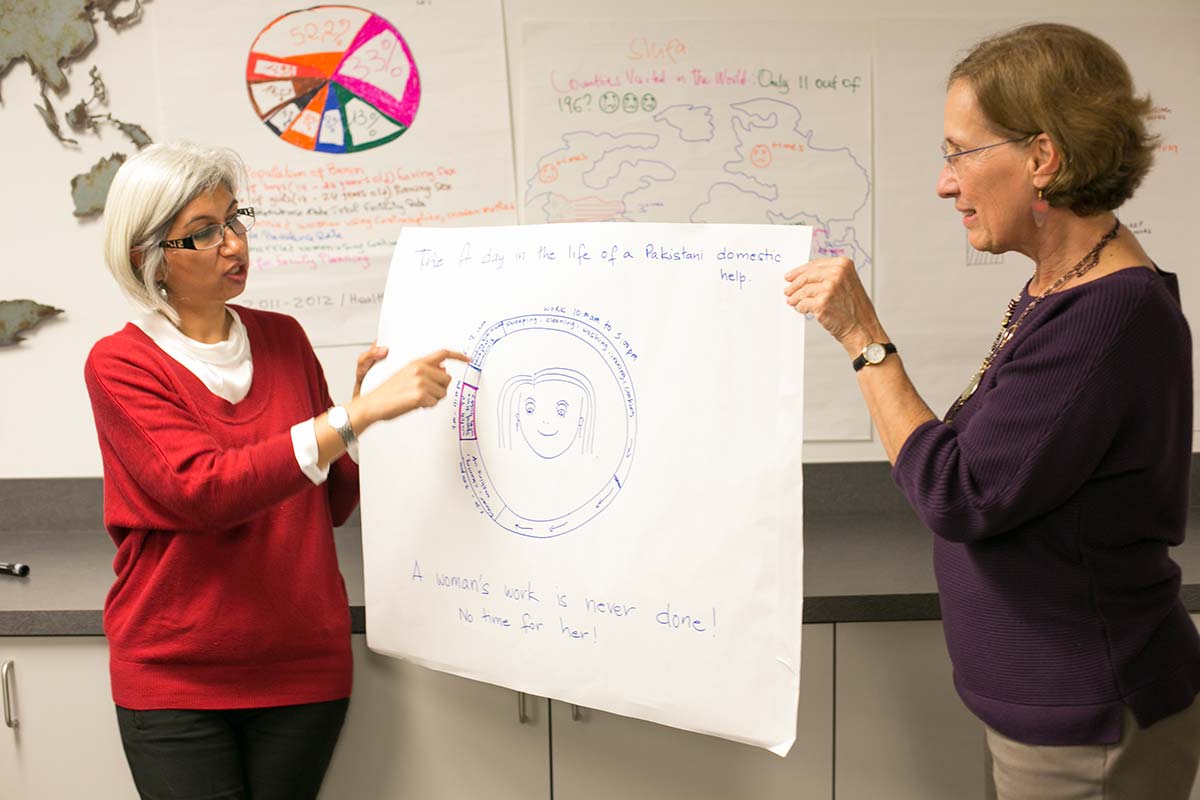
PRB builds coalitions and conducts workshops around the world to give our key stakeholders the tools they need to understand and communicate effectively about population issues.
PRB works to ensure that policymakers in developing countries and in the United States rely on sound evidence, rather than anecdotal or outdated information, when developing population, health, and environmental policies.
PRB’s work is funded by private foundations, government agencies, and individual donors, and we frequently collaborate with other nonprofit organizations and universities. To these partnerships, PRB brings broad expertise and innovative, cost-effective approaches to analysis, information sharing, and capacity building.
In late September 2015, as PRB’s operating year drew to a close, world leaders convened in New York to adopt the United Nations Agenda for Sustainable Development, which will guide national policy actions through 2030.
The Agenda’s 17 Sustainable Development Goals target significant progress in reducing poverty, hunger, social inequities, and environmental risks, and advancing human health, education, and sustainable growth. The leaders also agreed to measure progress by a range of specific indicators.
How does this relate to PRB? The global goals have strong overlaps with our core issue areas in population, health, and the environment. And the countries’ commitment to rigorous measurement will require careful analysis, interpretation, and synthesis of underlying data—a core element of the work we do at PRB.
The year brought several examples of how our work informs policy dialogue and decisions. Many are described in the Project Highlights section of this report, including:
We will continue to provide impartial, data-driven knowledge and strengthen the capacity of others to use this knowledge to advance the well-being of current and future generations.
And, during this first full year of my tenure as president of PRB, we took steps to ensure sustained achievement in the future: Our senior leadership team added new members who broaden our capacity for innovation. A new strategy to enhance PRB’s impact moved into full swing. And we adopted an organizational monitoring, learning, and evaluation program to better gauge PRB’s performance.
But our focus is not changing. We will continue to provide impartial, data-driven knowledge and strengthen the capacity of others to use this knowledge to advance the well-being of current and future generations.
I believe the new priorities set by the world community point to an active role for PRB in 2016 and beyond, in support of academics, advocates,

decisionmakers, funders, researchers, and the media. Indeed, significant multiyear awards recently received from the United States Agency for International Development for the PACE project, and from the U.S. Census Bureau to provide data user support services, reflect confidence in PRB’s ability to deliver consistent value.
Finally, I would like to extend my deepest thanks and appreciation to three departing members of PRB’s Board of Trustees: Margaret Neuse, who served as Board chair, Elizabeth Chacko, and Michael Wright. Their contributions extended well beyond their Board responsibilities, and their valuable input will be missed.
Sincerely,
JEFFREY JORDAN
President and CEO, PRB
| ASSETS | |
| CURRENT ASSETS | |
| Cash and cash equivalents | $2,857,467 |
| Grants and contracts receivable | 271,020 |
| Prepaid expenses and other current assets |
147,892 |
| Total current assets | 3,276,379 |
| PROPERTY AND EQUIPMENT, AT COST | |
| Furniture and equipment | 656,745 |
| Leasehold improvements | 840,656 |
| Less—accumulated depreciation and amortization |
(1,011,928) |
| Net property and equipment | 485,473 |
| Long-term investments | 8,290,043 |
| Total assets | $12,051,895 |
| LIABILITIES AND NET ASSETS | |
| CURRENT LIABILITIES | |
| Accounts payable and other accrued expenses |
$169,695 |
| Accrued compensation | 179,721 |
| Deferred dues and subscriptions | 25,150 |
| Deferred rent | 50,547 |
| Advances received for grants and contracts |
2,051,762 |
| Total current liabilities | 2,476,875 |
| Long-term deferred rent | 746,735 |
| Total liabilities | 3,223,610 |
| NET ASSETS | |
| Unrestricted | 250,000 |
| Unrestricted—Board/designated | 8,521,405 |
| Permanently restricted | 56,880 |
| Total net assets | 8,828,285 |
| Total liabilities and net assets | $12,051,895 |
| ACTIVITIES | |||
|---|---|---|---|
| Unrestricted | Permanently Restricted |
Total | |
| REVENUES, GAINS, AND OTHER SUPPORT | |||
| GRANTS AND COOPERATIVE AGREEMENTS | |||
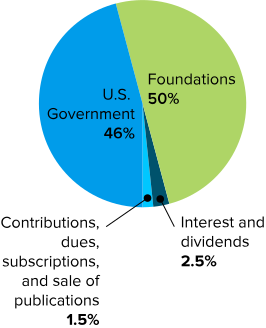
| U.S. Government | $4,808,486 | $ - | $4,808,486 |
| Foundations | 5,185,215 | - | 5,185,215 |
| Interest and dividends | 263,816 | - | 263,816 |
| Contributions | 95,681 | - | 95,681 |
| Dues and subscriptions | 56,800 | - | 56,800 |
| Sale of publications | 16,229 | - | 16,229 |
| Total revenues | 10,426,227 | - | 10,426,227 |
| EXPENSES | |||
| PROGRAM SERVICES | |||
| International programs | 7,383,241 | - | 7,383,241 |
| Communications | 1,261,677 | - | 1,261,677 |
| Domestic programs | 1,305,296 | - | 1,305,296 |
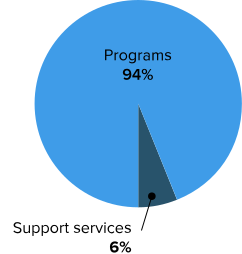
| Total program services | 9,950,214 | - | 9,950,214 |
| SUPPORTING SERVICES | |||
| Management and general | 502,181 | - | 502,181 |
| Fundraising | 114,911 | - | 114,911 |
| Total supporting services | 617,092 | - | 617,092 |
| Total expenses | 10,567,306 | - | 10,567,306 |
| Decrease in net assets before net realized and unrealized losses |
(141,079) | - | (141,079) |
| Net realized and unrealized losses on investments |
(462,455) | - | (462,455) |
| Change in net assets | (603,534) | - | (603,534) |
| Net assets, beginning of year | 9,374,939 | 56,880 | 9,431,819 |
| Net assets, end of year | $8,771,405 | $56,880 | $8,828,285 |
Contributions from the individuals listed below allowed PRB to fund essential program expansion and organizational innovations during the year. If you would like to help us continue to inform, empower, and advance, please visit the donations page on our website.
* Denotes contribution of $1,000 or more.
Contributors and Sources of Support during fiscal year ending September 2015.
PRB had the opportunity to collaborate with the following organizations during 2015:
All Trustees listed as of Sept. 30, 2015.
* Stanley Smith became Chair of the Board in October 2015 after Margaret Neuse rotated off the Board.
All staff listed as of Sept. 30, 2015.
* Resigned in FY2015.
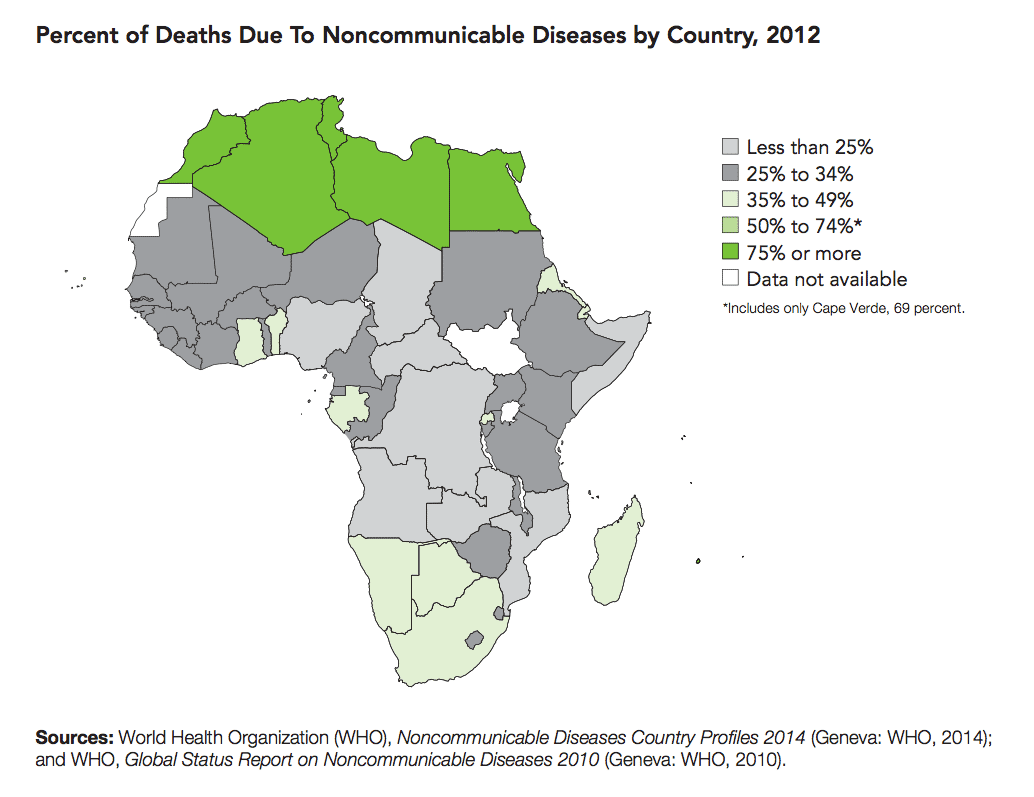
PRB’s Toshiko Kaneda was in Nairobi in April 2015 to launch a groundbreaking report she wrote with colleague Reshma Naik on the growing threat of noncommunicable diseases (NCDs) in Africa. At the launch event, Kaneda delivered a hopeful message: “Africa's future does not need to be defined by an overwhelming noncommunicable disease burden."
NCDs such as cardiovascular disease, cancer, chronic respiratory conditions, and diabetes are the leading causes of death in every part of the world except Africa. But based on current trends, Africa will join the rest by 2030, imposing significant additional burdens on a continent that is also projected to see its population double within the next generation.
The PRB report, the first comprehensive resource of its kind for Africa, focuses on NCD risk factors among youth and includes detailed country-level data for the prevalence of young people’s tobacco use, alcohol use, unhealthy diets, and insufficient exercise. The project received support from the AstraZeneca Young Health Programme.
The youth focus reflects the fact that behaviors established in early adolescence and young adulthood tend to stick and set the stage for NCDs later in life. The report included several recommendations for keeping young people on a healthier path, including: imposing taxes on cigarettes, alcohol, sodas, and other harmful products; involving young people, families, schools, and communities in addressing risks; and integrating NCD prevention with sexual and reproductive health programming for young people since the associated risk and protective factors for these overlap.
"This report provides critical data for governments, health authorities, universities, and NGOs, and we are delighted to have been able to support this work," said David Smith, AstraZeneca's executive vice president for global operations, speaking at the Nairobi launch. "Our hope is that it will be used to raise awareness, inform planning, and ultimately contribute to preventing the unhealthy behaviors by adolescents which, if not tackled, will lead to the predicted increase in the NCD burden in Africa."
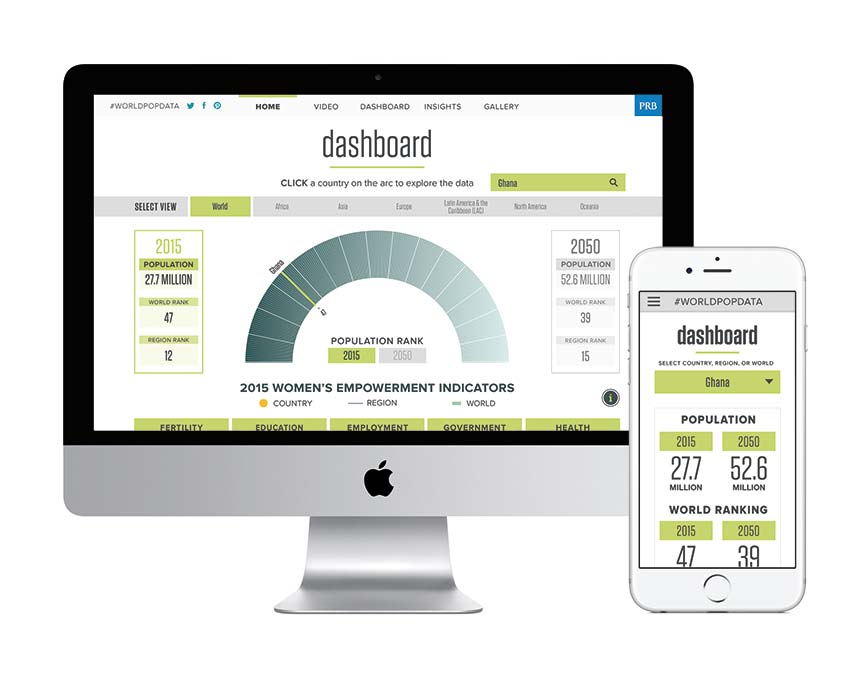
Every year, PRB produces its signature World Population Data Sheet package as a go-to reference on key population, health, and environment statistics for all countries. For the 2015 edition, we made this information more accessible and compelling through creative use of digital mediums—video, infographics, and visualizations.
The result, worldpopdata.org, is a microsite with a wealth of information about general population trends and the Data Sheet’s theme of women’s empowerment. The site generated a substantial increase in online visitor traffic compared to the previous year’s package and received recognition from the global design community. For example, Visually’s widely read design blog tapped worldpopdata.org as one of the 24 best interactive websites of 2015, and it was a shortlisted finalist in Kantar’s Information is Beautiful contest.
Why did we focus on women’s empowerment? This is a top priority on the global development agenda. It features prominently in the Sustainable Development Goals (SDGs) and is recognized as critical to the alleviation of poverty and improvement of quality of life for all people, not just women. PRB also has deep expertise in this topic through our work managing the Interagency Gender Working Group and our thematic research on topics ranging from gender-based violence and child marriage, to gender mainstreaming and gender earnings gaps.
The microsite includes an animated video, “Measuring Up,” that assesses where women and girls stand in key measures of social progress. An interactive data dashboard allows users to select any country and view current and projected population figures as well as a range of gender-specific indicators comparing regional and world averages. The Insights section summarizes countries’ progress on women’s education, employment, and political representation targets that were included in the Millennium Development Goals, the precursors to the SDGs. And a series of graphics explore gender topics such as early marriage trends and financial inclusion of women.
Digital visualization is a hallmark of PRB’s work to bring data and research to life. Explore more examples on our multimedia page.
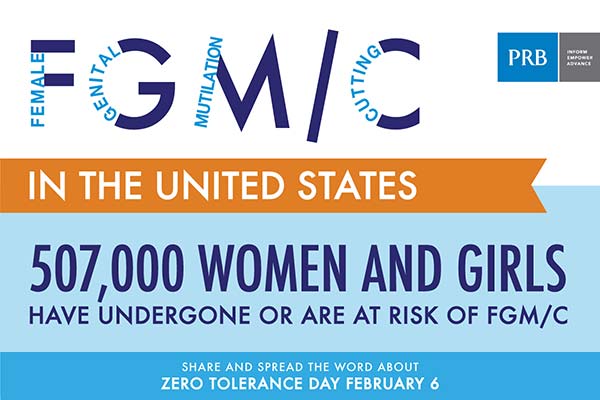
Female genital mutilation/cutting (FGM/C) is a traditional rite of passage in many cultures. But it is also a dangerous practice that can cause serious lifelong health and social problems. More than 3 million girls and women, the majority in sub-Saharan Africa, are at risk of being cut each year.
The practice is also a threat in the United States, despite laws forbidding it. FGM/C prevalence rates have held steady or declined in many African countries in recent years, but the number of women and girls at risk of FGM/C in the United States is expected to increase in the future, as foreign-born immigration from Africa increases. Between 2000 and 2013, the U.S. foreign-born population from Africa more than doubled, from 881,000 to 1.8 million.
PRB’s Mark Mather and Charlotte Feldman-Jacobs analyzed U.S. Census and other data and released an estimate in February 2015 showing that up to 507,000 girls and women in the United States today have either undergone or are at risk of FGM/C. This figure was more than twice the number of women and girls estimated to be at risk in 2000 (228,000) from a previous study conducted for the African Women’s Health Center at Brigham and Women’s Hospital.
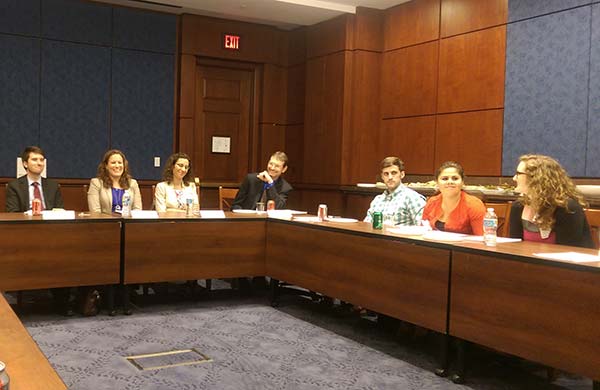
The PRB analysis generated significant press coverage and helped put FGM/C on U.S. policy radar screens. PRB staff were interviewed for feature stories by ABC News, Al Jazeera, The Guardian, The Los Angeles Times, The New York Times, Reuters, and others. Mather also presented the findings at an informal U.S. Congressional briefing on the topic during August 2015.
The growing FGM/C numbers mean that U.S. health providers will be examining more patients who have undergone the procedure. Though some hospitals and health centers in the United States have created a culturally and linguistically competent environment for women with FGM/C, much remains to be done to meet the needs of this population. Often women with FGM/C receive poor-quality health care, creating an environment of distrust towards our health care system.
Many researchers aspire to see their work inform policy discussions, but the path to doing so is not always clear. PRB’s training in policy communication strengthens the capacity of young researchers in doctoral-level population and health studies to engage policy influencers and decisionmakers effectively.
The training starts with an intensive skills-building summer workshop on the role of research in the policy process and techniques for effective communication of research findings. The workshop includes tips on making effective presentations to nonresearch audiences, using digital media to convey findings, and delivering a “60-second elevator pitch” when the media calls or time is tight. During the academic year following the workshop, PRB staff coach trainees as they write policy briefs.
PRB has conducted policy communication trainings for researchers from developing countries over four decades, primarily with funding from USAID. For the first time last year, an inaugural class of U.S.-focused doctoral students convened in mid-2015, thanks to new support from the Eunice Kennedy Shriver National Institute of Child Health and Human Development.
U.S. doctoral candidates are learning about policy communication and how the U.S. political system—primarily, Congress—hears about and uses research results. Training has been hands-on, including a visit to Capitol Hill to hear from Congressional staff about effective engagement.
“Sometimes it seems like academic research is published in an echo chamber, and I want work from my own discipline to matter more broadly,” said Connor Sheehan, a doctoral student at the Population Research Center and Department of Sociology at the University of Texas at Austin who is in the current training class. He’s interested in health care access, particularly among military veterans.
Another participant, Aresha Martinez-Cardoso, a Ph.D. candidate from the University of Michigan’s Department of Health Behavior and Health Education, said, “My research and work focuses on immigration policy and racial/ethnic health disparities, which can at times be controversial. So I really hope to be able to learn how to control my message and communicate my findings outside of academia.”
In this digital age, the world is saturated with readily available data sources. More governments, businesses, and other institutions are adopting “open data” principles, adding to the volume.
But the data deluge also generates soaring demand from current and potential users for advice and assistance in understanding, analyzing, and applying new data resources—assistance that PRB’s technical staff is well-placed to provide.
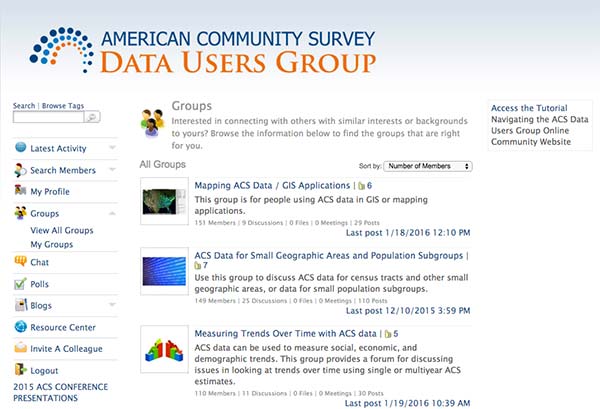
PRB manages the American Community Survey (ACS) Data Users Group, in partnership with the U.S. Census Bureau. The ACS, conducted by the Census Bureau, provides a wealth of demographic, social, economic, and housing information annually for communities across the United States. The ACS Data Users Group facilitates learning and information sharing among members through an online community, webinars, and sessions at professional meetings.
PRB also organizes and leads an annual ACS Data Users Conference. The second of these took place in May 2015 in College Park, Maryland, and attracted more than 250 participants. Speakers included John H. Thompson, director of the U.S. Census Bureau, and Mark Doms, under secretary of Commerce for Economic Affairs.
The program included eight breakout sessions covering specific data use cases, such as tapping into ACS data on health insurance and disability. PRB also organized a preconference workshop for novice ACS users to provide hands-on training. After an overview of ACS data and the tools available for accessing them, the workshop participants tried their hand in three case study exercises.
Many who attended the annual conference are also members of the ACS Online Community, where the many discussion groups include Mapping ACS Data, Measuring Trends Over Time, and ACS News and Events. The online platform promotes information sharing among ACS data users and is a repository for recorded presentations from the ACS Data Users Conferences.
Information is a global resource. To make it a global asset, those gathering and using information need convenient spaces to exchange ideas, pursue collaboration, and disseminate results.
PRB creates these spaces through its global communities of practice focused on priority themes in population, health, gender, and the environment. The communities are multidimensional: Through online hubs, trainings, data workshops, conference programs, and other methods, PRB fosters meaningful knowledge sharing and dialogue, and helps develop champions for policy change.
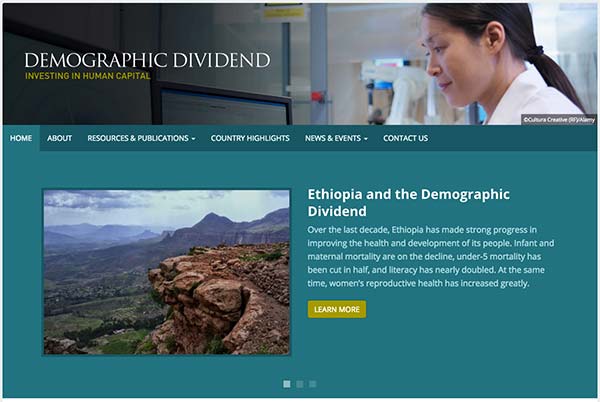
One community of practice focuses on the demographic dividend, which refers to the accelerated economic growth that may result when a rapid decline in a country’s fertility rate leads to an increase in the working-age population relative to the number of dependents. The right mix of policies needs to be in place to take advantage of such demographic changes—as occurred in several Asian countries in the mid-to-late 20th century.
With support from the David and Lucille Packard Foundation, PRB took two important steps in 2015 to facilitate global discussion and advocacy around the demographic dividend in Africa, where recent demographic trends hold promise:
PRB also conducted country-specific research and capacity building in Ethiopia and the Democratic Republic of the Congo in collaboration with local partners. For example, in Ethiopia, PRB worked with the Ethiopian Economic Association (EEA) on research and produced a report in July, The Demographic Dividend: An Opportunity for Ethiopia’s Transformation, that was presented at the third National Population and Development conference in September. PRB is providing technical support to members of the EEA who are emerging as policy champions for the demographic dividend.
Around mid-2015, policymakers in Kenya's Embu and Bungoma counties approved firm budget commitments in the 2016 fiscal year for family planning. This marked success for PRB's work with local partners to bolster family planning policies in the country.
Kenyan elections in 2013 were the official launch of devolution to a 47-county system that tasked new county governors and assemblies with governance, financial management, and other functions. PRB, through USAID’s IDEA project, worked with the National Council for Population and Development (NCPD) in Kenya on targeted, decentralized family planning advocacy.
NCPD's county population coordinators identified local champions who supported family planning and had links to decisionmakers. NCPD staff and champions attended a PRB-led policy communication workshop to strengthen skills, learn about the county budgeting process, and develop county-specific advocacy plans. NCPD staff and the champions also used PRB’s ENGAGE multimedia presentations to help make the case for family planning in meetings with county decisionmakers.
Outcomes in Bungoma and Embu counties show that targeting the right decisionmakers from the beginning of the activity is central to success. Potential targets included county executives in health, finance and planning, gender and youth, as well as members of county health and budget committees, and the county health management team.
Beatrice Okundi, the coordinator in Embu County, said her most important jobs were to build relationships, provide relevant data, and show county leaders that family planning was a county-level issue. Okundi used new relationships to develop "buy-in to the idea of creating a budget line for family planning."
Localizing messages is also important. Shelley Megquier, PRB’s point person on this effort, said the approach of each advocacy team took a different shape in each county and "[coordinators] strategically chose specific arguments in support of family planning based on the cultural context of their county and the county's health indicators.”
Budget line items aren’t the end of the story. Work remains to translate commitments into action on the ground. But solidifying family planning’s place on the policy agenda is a vital first step in the process.
Media play a crucial role in informing the public about policy issues, providing evidence for policy decisionmaking, and holding governments accountable for policy commitments. For the past 25 years, through the USAID-funded Women’s Edition program and other initiatives, PRB has worked to strengthen the capacity of journalists to understand and cover population, health, and gender issues.
Our model includes convening workshops where journalists learn from subject matter experts, forming journalist networks for ongoing knowledge sharing, mentoring reporters, conducting study tours, and attending relevant conferences where the journalists produce stories about conference themes.
This year brought accolades for the work of alumni of PRB media activities. Members of the Health Journalists Network in Uganda won the Population Institute’s top Global Media Award for a 43-page special edition of the Health Digest analyzing Uganda’s reproductive health (RH) policy and highlighting improvements for women. PRB provided training and editorial guidance, along with dissemination to Ugandan government offices, health facilities, and RH advocates.
The special edition covered Uganda’s high maternal mortality rate, brain drain of health workers from the country, reasons many women do not use contraceptives, and implications of a rapidly growing population. Esther Nakkazi, founder of the Network, said, the edition “has remained a point of reference for many organizations, policymakers, and journalists” in Uganda.
Maimouna Gueye, a Senegalese journalist, won a Global Health Reporting award from the International Center for Journalists for a series of stories about high rates of teen pregnancy in the Ziguinchor region of southern Senegal, a “freestyle” method of natural childbirth, and reproductive health care among migrants in informal settlements in central Dakar.
“PRB helps us get access to sources of information and to communities. These are two fundamental things for journalists … and the people who live” in the communities, said Gueye, editor-in-chief of Senegal’s national daily, Le Soleil.
Each year, malnutrition contributes to the deaths of more than 3 million children under the age of 5—or about half of child deaths globally. As a result of malnutrition, more than 160 million children under 5 are stunted, meaning they are shorter than normal for their age. A stunted child is unlikely to ever reach his or her full potential. Lack of adequate nutrition in first 1,000 days following conception also can cause irreversible damage to the child’s brain.
With support from the Bill & Melinda Gates Foundation, PRB’s RENEW project focused on strengthening commitments and resources toward the alleviation of malnutrition in pregnant women and children. In Nigeria, PRB collaborated with a multisectoral task force, headed by the Nutrition Division in the Department of Family Health of the Federal Ministry of Health, to produce a multimedia presentation entitled “Malnutrition: Nigeria’s Silent Crisis,” along with an accompanying package of informational materials.
In Nigeria, the multimedia presentation has been used by about 20 nutrition organizations and shown to an estimated 1,050 high-level government officials, medical officers, civil society partners, religious leaders, donors, academics, and journalists, to foster policy dialogue and advance policy actions. It has been featured in numerous policy venues, including a briefing with the minister of the National Planning Commission, a conference with the ministers of Health and Agriculture on nutrition-sensitive agriculture, a meeting with nutrition directors and permanent secretaries from 36 states to develop state-specific nutrition plans, and the revival of a Federal Capital Territory committee on food and nutrition in Abuja.
In addition, PRB’s RENEW team has strengthened local capacity by providing technical assistance to a Nigerian civil society organization (CSO), Scaling-Up Nutrition, that supports other local CSOs in the following states: Lagos, Kebbi, Akwa Ibom, Enugu, Benin, Adamawa, Kwara, Ogun, and Delta.